Create Live Tiles Windows 10
Dec 17, 2015 This Windows 10 Tips and Tricks tutorial will teach you how to create custom Live Tiles in Windows 10. Windows 10 is known for it's Live Tile Start Menu, but there's not much support from Win32.
In early 2016, I on my PC. Live tiles just weren’t that useful to me, or at least I didn’t see a reason to keep them. But now I’m starting to bring live tiles back after finding a useful—or at least novel—reason for them: Steam games. Ian PaulSteam games as live tiles in the Windows 10 Start menu.An odd quirk of Steam is that you can’t easily add live tiles for your games to the Start menu or Start screen. But a free Windows Store app called can solve that problem in Windows 8 and Windows 10.When you use Steam Tile you add individual tiles to Start for your Steam games with information on your progress.Each tile will switch between displaying game art, and your personal stats—such as hours played and badges earned— pulled from Steam. The content of the live tile will vary by game. Civil war overhaul.
Create Live Tiles Windows 10 Desktop
In my case, for example, Tom Clancy’s The Division only displayed hours played, while The Witcher 3: The Wild Hunt showed achievements and hours spent battling in CD Projekt Red’s open world game.It’s a nice addition to the Start menu. The only downside is that to use Steam Tile you have to set your Steam profile to public, which may be a deal-breaker for some. It also seems like the app hasn’t been updated in a while, as the dialogs inside it all mention Windows 8. Even so, it still works just fine in Windows 10. Adding Steam Tiles with Steam Tile Ian PaulClick Edit Profile to make your profile public.First, let’s set our Steam profile to public. Open the Steam desktop program, and then click your username in the upper right-hand corner. From the drop-down menu select View Profile. Next, select Edit Profile on the right-hand side of your profile under the Years of Service marker.
Ian PaulUnder My Privacy Settings make your profile public.On the next screen select My Privacy Settings on the right-hand side. Then under Profile Status select the Public radio button. Finally, scroll down to the bottom of the screen and click Save Changes. While we’re here make a note of your Steam user profile URL, which is username/. You’ll need this in a moment.Next, download and install Steam Tile from the Windows Store (link above). Once that’s done launch the program and it will ask for your Steam profile URL. Most of the URL is already filled in all you need to add is your username and then click Update. Ian PaulSteam Tile in action.After a few moments, you should see a screen like the one here with a list of games in a tiled list.
Either choose the game you want from the list or search for a specific game in the search box. Once you find the game you want, click it and don’t be put off by the magnify effect you see when you hover over a tile.Next, a pop-up window will inform you that Steam Tile is trying to add a tile to your Start menu. Click Yes and after a few moments the tile should be in your Start menu.Now here’s another downside of this scheme.
If you attempt to launch your game using the new live tile it will actually launch Steam Tile, which will in turn launch Steam, which will then launch the game. It’s a little circuitous, but as soon as Steam Tile launches you can just shut it down if you don’t want it taking up precious system resourcesIs this format easier than launching the games yourself using Steam directly? But personally I like seeing live tiles of my current games as a constant reminder that I need to, as our resident games critic Hayden Dingman would say, “.”.
If you pin a lot of apps in windows 10 start menu instead of having them in the desktops. The results as you may have noticed are not really kinda look good. However, MyTile helps you accomplish the looks you might want.This isn’t the first app ever that can let you create custom Windows 10 tiles. There are better options available. Better, but also resource consuming, considering all you want to do is change some tiles. You can have a look at on the Windows Store. That app will need a helper app which needs to always run in the background if you want your tiles to launch the respective app or file.
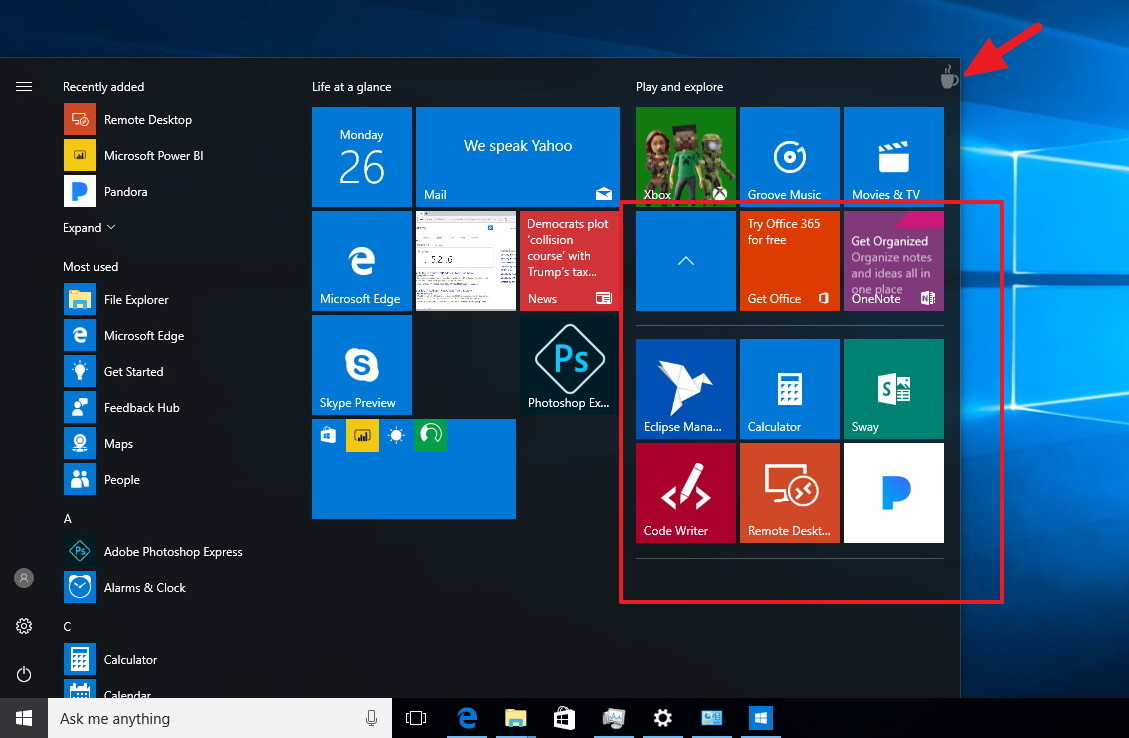
That’s a bit of a letdown, which is why I prefer MyTile.Developed by from XDA, MyTile is different in that it does not require a helper app which has been the case for similar apps until now. This is because MyTile uses visualmanifest.xml via which the latest Windows 10 allows custom tiles. Download MyTile.Using the app is pretty simple and straightforward Download the archived package from the download section above. Extract the contents into a folder once downloaded.
It contains the following four files:. MyTile.exe. MyTile.visualelementsmanifest.xml. MyTile-mytile.png. template.xml. But before you can use MyTile to create tiles apps, you should probably make sure the apps have a shortcut in the start menu.
Create a shortcut and place it in the Start menu folderWhen you want to create a custom tile for an app, make sure you have a shortcut already present in the Start Menu folder. You can create a shortcut for any file or program by right-clicking on it and selecting Send to Desktop (create shortcut). You’ll need to move this shortcut to C:ProgramDataMicrosoftWindowsStart Menu before you can create a custom tile for it. Also Read: Create a custom tileTo make a custom tile, right tap on MyTile.exe and select Run as admin. Select the application alternate route you might want to make a custom tile for from the rundown. Underneath the rundown of applications, you will have the alternative to choose a tile symbol or picture. You can either choose a square picture to use as a tile or basically select a symbol and change the foundation shading as needs be.


MyTile even gives you a chance to choose the shade of the Tile mark and whether to demonstrate the name or not. When you’re happy with the look, simply tap on the Save buttonYour custom tile has been made yet MyTile does not consequently stick the tile to your Start menu. This isn’t a noteworthy bother however on the grounds that you can without much of a stretch do as such yourself. In the event that you don’t definitely know, to stick anything to begin, perfectly tap on it and select Pin to Start. There is no restriction to what number of tiles you can make, in any event not due to the application. Simply ahead and make a lovely tile for all your most loved desktop applications and stick them to the begin menu.